00:08
Speaker 1
Welcome back to the deep dive. It is uh Wednesday, February 25th, 2026, and I have to be honest, looking at the global dashboard this morning, it feels like the planet's thermostat has just completely lost the plot.
00:13
Speaker 2
Yeah, it is certainly one of the most volatile starts to a year we've seen in the data sets. The systems are behaving
00:19
Speaker 1
erratically,
00:20
Speaker 2
unpredictably, very unpredictably.
00:22
Speaker 1
That is putting it mildly. I mean, usually when we talk about climate, the narrative is pretty linear, right? The world is warming,
00:27
Speaker 2
but Right now, if you look at the news, half the headlines are about people digging out from under record-breaking snow, and the other half are about just catastrophic heat.
00:33
Speaker 1
Right. The extremes are getting more extreme.
00:35
Speaker 2
Exactly. And the immediate visceral reaction to this for me, and I think for you listening, is pretty straightforward. It's like, we need to stop this. We need to ban the carbon. We need to regulate the industry into the ground
00:44
Speaker 1
immediately,
00:45
Speaker 2
which is a totally natural moral imperative. I mean, the instinct is to pull the emergency brake as hard possible,
00:50
Speaker 1
right? But that is exactly where the sources you brought today take a sharp and frankly uncomfortable turn. We are looking at a stack of research economists, climate data from Capernacus, reports from the WMO that suggests a really disturbing counternarrative. The premise here is the unintended backlash.
01:03
Speaker 2
It's a difficult concept to sit with.
01:05
Speaker 1
It is because the argument isn't that climate policy is wrong. The argument is that the way wealthy nations have stampeded into these policy specifically in the last couple of years might actually be accelerating the damage in the short term.
01:16
Speaker 2
Precisely.
01:17
Speaker 1
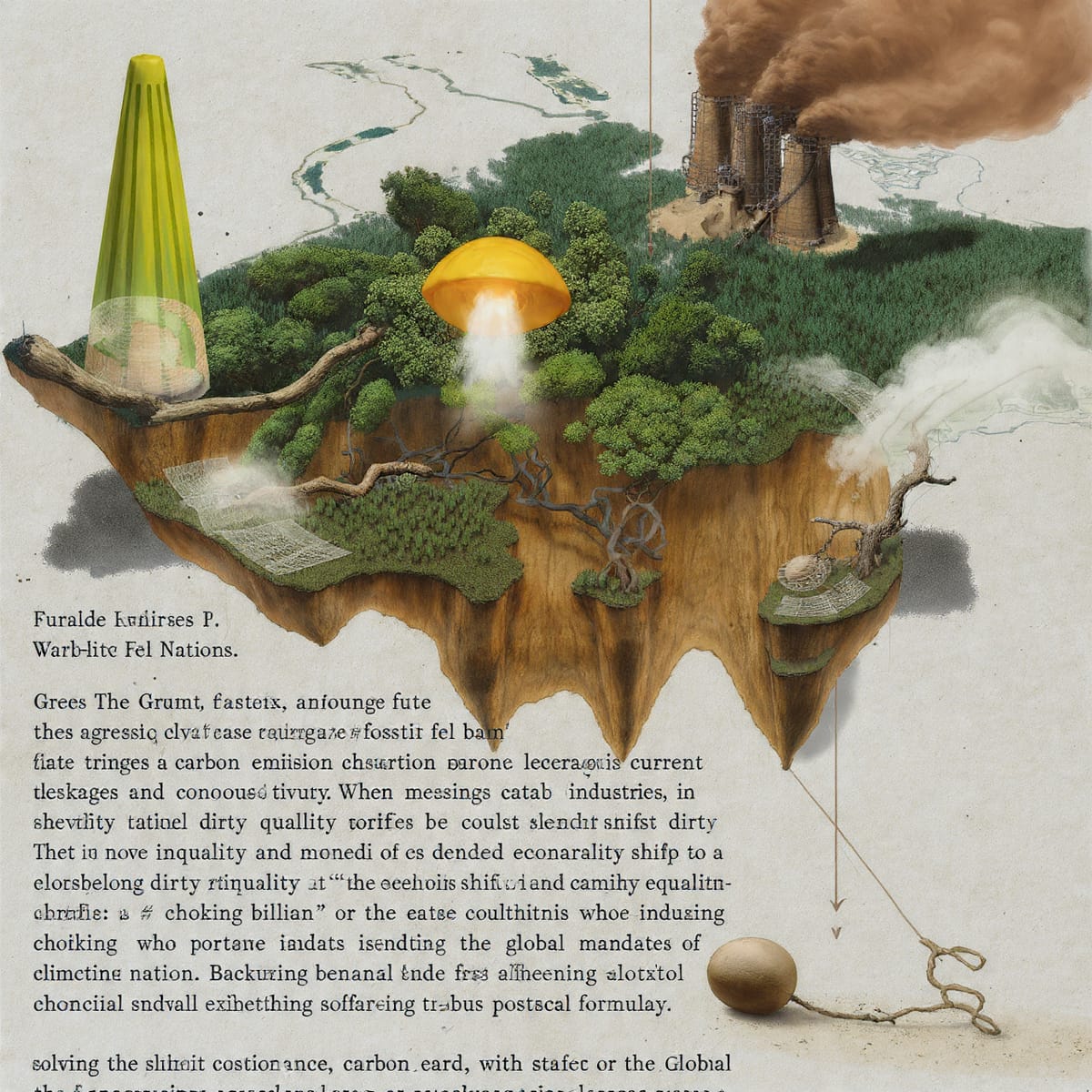
Okay, let's unpack this because you're saying that trying to fix the climate could be breaking it faster. That we might be triggering a green paradox that is actively making 2026 hotter.
01:26
Speaker 2
Yeah. The mission for this deep dive is to really explore two specific economic failures driven by these stampede policies. We have the green paradox which is a temporal problem and carbon leakage which is a spatial one.
01:37
Speaker 1
So we are accidentally acting as the architects of of our own temporary destruction. Let's get into it.
01:42
Speaker 2
Let's dive in.
01:43
Speaker 1
Before we get to the heavy economic theory though, I want to ground this in the physical reality of right now because the weather isn't just bad. It's behaving strangely. You pulled the raw data from the World Meteorological Organization in Capernicus for January and February 2026.
01:55
Speaker 2
I did. And the headline number uh January 2026 being the fifth warmest January on record actually obscures the real story.
02:02
Speaker 1
How? Because average implies consistency, but what we're actually seeing is massive divergence.
02:07
Speaker 2
This is that meandering polar jetream everyone is talking about.
02:11
Speaker 1
Exactly. The jetream is usually this tight band keeping the cold air up top, but it's weakening and it's wobbling. It's spilling Arctic air deep into the mid latitudes.
02:20
Speaker 2
So that's why while we're talking about global warming, you have places like the Kamshaka Peninsula in Russia buried under what? 2 meters of snow in early January.
02:28
Speaker 1
Over 2 meters. Yeah. It's the snowiest period they've seen since the 19 1970s.
02:33
Speaker 2
I saw the footage. It looked like a disaster movie. People were literally tunneling out of their second story windows.
02:39
Speaker 1
It's incredible. And it's not isolated. Almori in Japan hit 1.7 m of snow depth, which is the most they've had in 40 years. This is paralyzing cold.
02:48
Speaker 2
But then
02:49
Speaker 1
you spin the globe to the southern hemisphere.
02:52
Speaker 2
And it is an oven. On January 26, just last month, Seduna in South Australia hit 49.5 degrees C.
02:59
Speaker 1
49.5. That's what basically 121 degrees Fahrenheit. That is biologically dangerous heat.
03:05
Speaker 2
It's lethal. And that exact heat drove massive wildfires across Chile, specifically the Bio and Nubble regions and all the way down into Patagonia and Argentina,
03:14
Speaker 1
just burning everything in its path.
03:16
Speaker 2
Right. And just to complete the triad of chaos, you have catastrophic flooding in Mosmbique affecting 650,000 people. South Africa even declared a national disaster.
03:25
Speaker 1
Wow. So, the atmosphere is holding more energy and it is releasing it in these violent whiplash events. It really feels like the weather has just broken.
03:33
Speaker 2
It does. And this brings us to the central tension of the episode. We see this chaos, the fires in Chile, the floods in Mosamb beek, and developed nations respond with big aggressive laws. The US pushes the inflation reduction act. Europe pushes the green deal mandates. We say, "Okay, oil companies, your days are numbered,
03:49
Speaker 1
which on paper sounds like exactly the right move, right? But this is where I get hung up. You're telling me that telling an oil company they're going out of business in 10 years makes them pump more oil today? That feels Totally counterintuitive. Wouldn't they want to, I don't know, ration what they have left?
04:03
Speaker 2
You would think so, but you have to look at it through the lens of pure asset management. This is what the economist Hans Vernerson described as the green paradox.
04:11
Speaker 1
Okay, walk me through the boardroom logic here.
04:14
Speaker 2
Imagine you're a major fossil fuel owner. You're sitting on a massive reserve. Billions of dollars of assets underground. Suddenly, wealthy nations announce strict binding timelines. By 2035, internal combustion is dead. By 2040, heavy carbon Taxes kick in globally.
04:29
Speaker 1
Okay. So, my product has an expiration date.
04:32
Speaker 2
Exactly. It goes from being a long-term asset that appreciates in value to a wasting asset.
04:37
Speaker 1
Like owning a warehouse full of perishable fruit.
04:40
Speaker 2
Perfect analogy. If you leave that oil in the ground for 20 years, it will be completely worthless. It becomes a stranded asset. So, as a rational economic actor, what is your response?
04:50
Speaker 1
Well, I don't wait for it to rot. I liquidate. I sell everything I can as fast as I can.
04:55
Speaker 2
You initiate a fire sale, you extract at maximum capacity to monetize that resource before the banhammer drops. And this floods the global market with supply
05:03
Speaker 1
and basic supply and demand kicks in. The price drops,
05:06
Speaker 2
the price crashes. And this is the paradox because the price of fossil fuels drops so low, it becomes dirt cheap for developing nations or unregulated sectors to just burn oil rather than invest in clean energy. So a global consumption actually spikes.
05:19
Speaker 1
So the mere announcement of the ban stimulates the binge. It's like announcing a Prohibition on alcohol starting next month, so everyone drinks twice as much this month.
05:27
Speaker 2
Precisely. In the short term, we've accelerated the emissions timeline. Instead of burning that oil slowly over 40 years, we burn a huge chunk of it in 10. The total carbon hits the atmosphere faster, creating a sharper warming spike exactly when we're trying to flatten the curve.
05:41
Speaker 1
Wow. Okay, that perfectly explains the fire sail aspect, but that's just the timing of the pollution. The other side of this coin is the location. of the pollution. We need to talk about carbon leakage,
05:52
Speaker 2
the spatial problem,
05:53
Speaker 1
right? Because looking at the 2024 and 2025 data, it really seems like we're just playing a massive shell game.
05:59
Speaker 2
The data from the ADGR report, that's the emissions database for global atmospheric research, is pretty damning on this front.
06:05
Speaker 1
So, let's look at those numbers. Yeah. Because the EU27, they have the strictest policies, right? High carbon taxes, tight manufacturing rules through their emissions trading scheme. And they won locally speaking, they decreased emissions by 1.8%. accomplish.
06:19
Speaker 2
You'd think so, but global greenhouse gas emissions rose by 1.3%. We hit 53.2 gatons of CO2 equivalent.
06:26
Speaker 1
So, Europe cleaned up, but the world got dirtier. Where is the extra pollution coming from?
06:31
Speaker 2
It's coming from the relocation of industry. While Europe dropped, emissions in China, India, Russia, and Indonesia all increased. Indonesia specifically saw a massive 5.0% relative increase.
06:42
Speaker 1
5% in one year. That's not just normal population. growth.
06:46
Speaker 2
No, that is industrial migration, spatial carbon leakage. If you make it incredibly expensive to manufacture steel or cement in France, the global demand for steel doesn't just disappear. The capital flows to where it's cheap.
06:58
Speaker 1
It flows to Indonesia or India where the regulations are looser. So, we aren't actually cleaning the air. We're just moving the smoke stacks.
07:05
Speaker 2
Exactly. It's the water bed effect. You push down on the pollution in one place and it bulges up in another.
07:11
Speaker 1
But wait, the sources actually point out it's worse than that. Doesn't just bulge up the same amount. It b is up higher. Why would the emissions be higher if they just move the factory?
07:20
Speaker 2
Because of the energy grid. A factory in Europe is likely powered by a mix of nuclear, wind, and maybe some gas. A relatively clean grid. That same factory moves to a region heavily reliant on coal. And now it's producing the exact same product, but with a much higher carbon footprint per unit.
07:35
Speaker 1
So by cleaning up our own backyard, we're actively dirtying the planet faster than if we just kept the factory in Europe.
07:41
Speaker 2
That is the uncomfortable truth of spatial leakage. Yes,
07:45
Speaker 1
the sources you brought highlight some really specific, almost tragic examples of these perverse incentives in action. I want to talk about bofuels cuz this one always blows my mind.
07:54
Speaker 2
Bofuel mandates, a textbook example of policy backfiring
07:57
Speaker 1
because the intention was so pure. The idea was stop burning ancient fossil fuels, start burning plants we can regrow. It sounds organic and green.
08:04
Speaker 2
It sounds virtuous. But when the US and the EU set these massive mandatory targets for bofuel content in their energy mix, They created a gigantic artificial demand shock. Suddenly crops like palm oil and jatroofa were worth their weight in gold.
08:17
Speaker 1
And to get that gold, farmers in places like Southeast Asia and Africa needed land fast.
08:22
Speaker 2
So they cleared the rainforests. They drained the petlands
08:26
Speaker 1
which are massive carbon sinks.
08:28
Speaker 2
Incredible carbon sinks. Petlands store centuries of accumulated carbon. When you drain them and burn them to plant palm oil, you release vastly more CO2 into the atmosphere right now than that bofuel could ever save in a 100 years of replacing diesel.
08:41
Speaker 1
We literally destroyed the planet's lungs to make a quote unquote green fuel.
08:45
Speaker 2
We did and we saw a similar thing with woody biomass in the UK,
08:49
Speaker 1
right? The wood pellets.
08:51
Speaker 2
The UK heavily subsidized burning wood instead of coal. But to meet the demand, they ended up cutting down trees in North America, processing them into pellets, and shipping them across the Atlantic on massive fossil fuel burning cargo ships. The energy cost of the transport completely undercut the climate. benefits.
09:06
Speaker 1
It's almost like a dark comedy, but the HFC 23 story, that one feels less like a mistake and more like a heist.
09:12
Speaker 2
The Cobra effect.
09:13
Speaker 1
Yeah, I want to spend a minute on this because it really illustrates how these global mechanisms can be completely gamed. Explain the UN clean development mechanism here.
09:22
Speaker 2
So, HFC23 is a super pollutant greenhouse gas. It's roughly 11,000 times more potent than CO2 at warming the atmosphere. It's basically a waste byproduct of manufacturing certain coolant gases for refrigerators and ACs
09:35
Speaker 1
and UN stepped in and said, "We will pay you to destroy this waste gas."
09:39
Speaker 2
Right? They offered carbon credits, which companies can sell on the open market for real money, for every single ton of HFC23 they incinerated. But they made a crucial error. They set the reward price too high.
09:51
Speaker 1
How high?
09:52
Speaker 2
High enough that the financial value of the carbon credits were destroying the waste was actually higher than the profit from selling the primary coolant gas they were manufacturing.
10:01
Speaker 1
Wait, are you And the waste became more valuable than the actual product.
10:05
Speaker 2
Exactly. So factories in developing nations realized this and they aggressively ramped up production of the coolant gas coolant that nobody even wanted to buy just to generate more of the super pollutant waste gas
10:16
Speaker 1
just so they could destroy it and claim the check.
10:19
Speaker 2
Yes. They were intentionally manufacturing a climate destroying gas just to get paid to incinerate it
10:25
Speaker 1
until they finally closed that loophole in 2011.
10:28
Speaker 2
Right. But for years it was highly profitable. It it just goes to show show how markets will metabolize any rule you create. If you don't design the mechanism perfectly, capitalism will find the flaw and exploit it, often at the planet's expense.
10:41
Speaker 1
And while the market is busy exploiting these loopholes, real people are breeding the fallout. I want to pivot here to the human cost of all this leakage because when we say factories move to developing nations, that's a very polite euphemism. It means pollution moves to where poor people live.
10:56
Speaker 2
It does. And this brings us to The concept of the choking billion.
11:00
Speaker 1
That term really stuck with me from the arcse study you shared. It's so visceral.
11:05
Speaker 2
It is. The study looked deeply into global air quality inequality. We usually measure inequality in dollars using the genini index. Right.
11:13
Speaker 1
The wealth gap.
11:14
Speaker 2
But these researchers calculated a genie index for PM2.5. That's the microscopic fine particulate matter from smoke and exhaust that gets deep into your lungs and your bloodstream.
11:24
Speaker 1
And the gap is widening
11:26
Speaker 2
significantly. The global genie index for PM2.5 pollution. rose from.32 in the year 2000 up to.36 by 2020
11:34
Speaker 1
which might sound like a tiny decimal shift to someone listening but in demographic terms
11:39
Speaker 2
it's massive it means this inequality gap is now wider than the income inequality of many actual nations it means that while the air quality in places like London New York or Paris is stagnating or even getting cleaner the air quality in the leaked nations is skyrocketing in toxicity
11:54
Speaker 1
places like India Pakistan Bangladesh
11:57
Speaker 2
parts of Africa we have effectively ported our smog. We get the clean air and they get the asthma, the heart disease, the shortened lifespans. There is a specific cohort of about 1 billion people mostly in South Asia and Africa who are facing exposure levels completely off the charts compared to the rest of the globe. The choking billion
12:16
Speaker 1
and the report mentions that urbanization is compounding this nightmare. It's not just the migrating factories, it's the magdacities growing around them.
12:24
Speaker 2
Yes, there's a really interesting study on landscape changes that factors into this. Urbanization is now the leading land Cape change driving water quality deterioration globally. It actually outweighs agriculture now.
12:35
Speaker 1
So you have these developing nations frantically trying to industrialize to meet western demand, taking on our dirty factories. Their cities are exploding in size. Their water systems are degrading and their air is becoming toxic.
12:47
Speaker 2
It's a complete convergence of environmental crises for the global south. Driven in large part by the north's desire to appear green on paper. It exposes the hypocrisy of localized environmental ism in a globalized system.
12:59
Speaker 1
You cannot claim to be green if your consumption is turning someone else's river black.
13:04
Speaker 2
Exactly.
13:05
Speaker 1
This is incredibly grim. I mean, we've painted a picture where our desperate attempts to fix the weather are causing fire sales on oil, pushing manufacturers to dirtier power grids, and literally choking a billion people.
13:17
Speaker 2
It is a dark picture. I won't sugarcoat it.
13:20
Speaker 1
So, do we just stop? Is the takeaway here, well, policy fails. Let's just burn it all and enjoy the party while it lasts because that seems to be the nihilistic conclusion a lot of people might jump to.
13:31
Speaker 2
Absolutely not. And I want to be very very clear about this. The sources, the economists, the climate scientists, they are not arguing for nihilism. And they are certainly not arguing for inaction. They are arguing for better design.
13:44
Speaker 1
Okay, give me the counter perspective then. How do we fix the green paradox without just giving up?
13:49
Speaker 2
First, we have to acknowledge a huge piece of good news. Decoupling works. We have hard data showing that 92% of the global economy has managed to grow while either reducing or flatlining their emissions.
14:01
Speaker 1
You can get richer without polluting more. The link isn't unbreakable.
14:05
Speaker 2
Correct. It is not a myth. And secondly, the green paradox, that fire sale we talked about, it's usually temporary. It's a transition pain
14:13
Speaker 1
because eventually the new tech just wins.
14:16
Speaker 2
Exactly. Eventually, solar, wind, and battery technology gets so incredibly cheap and efficient that it completely undercuts even the fire sale price of oil. We just have to survive the gap.
14:26
Speaker 1
Survive the gap. And regarding the weather chaos, we started with the sources actually show we are getting much better at surviving. Generally speaking, the WO report on adaptation was a rare bright spot in this whole stack of reading.
14:39
Speaker 2
It is a phenomenal success story. In just the last 10 years, the number of countries equipped with multi-hazard early warning systems has increased by 113%.
14:48
Speaker 1
So that's early alerts for floods, heat waves, cyclones.
14:52
Speaker 2
Right today, 119 countries, roughly 60% of the world have these systems in place. So when that 49° heat wave hit Australia or the catastrophic floods hit Mosamb beek last month. Fewer people died than would have 20 years ago. We are getting much better at dodging the bullets even if we are still struggling to take away the gun.
15:11
Speaker 1
But there is still a massive gap there, isn't there?
15:14
Speaker 2
There is. Only 43% of small island developing states have these early warning systems.
15:19
Speaker 1
And they're literally on the front lines of sea level rise and supertorrms.
15:23
Speaker 2
Exactly. So the inequality persists even in our adaptation to the crisis.
15:27
Speaker 1
Okay. So if we want to fix this root cause, If we want to stop the leakage and the paradox, what do the experts suggest? How do we stop the balloon from bulging out when we squeeze it?
15:37
Speaker 2
You need to change the geometry of the squeeze.
15:40
Speaker 1
I like that. How do we do that?
15:42
Speaker 2
The European Union has actually started this with something called the CBAM, the carbon border adjustment mechanism.
15:48
Speaker 1
This is the border tax I keep reading about.
15:51
Speaker 2
Think of it as a global equalizer. If you are a company and you want to sell steel to the lucrative European market and you made that steel in a dirty coal powered factory in Indonesia to avoid European regulations.
16:02
Speaker 1
Europe says not so fast,
16:04
Speaker 2
right? You have to pay a tariff at the border that equals the difference in the carbon price.
16:09
Speaker 1
So, it completely removes the financial incentive to move the factory in the first place. You pay the carbon tax whether you make it in Berlin or Jakarta.
16:17
Speaker 2
Exactly. It effectively closes the leakage loophole. But, and this is a big butt, it is highly controversial. Developing nations see it as deeply unfair protectionism
16:27
Speaker 1
because they're saying, "Hey, you guys got rich burning coal. for two centuries and now that we're trying to build our economies, you're taxing us for doing the exact same thing."
16:36
Speaker 2
Which is a completely fair and historically accurate argument. And that is why the second half of the solution is absolutely non-negotiable. Global coordination requires financial support and technology transfer.
16:47
Speaker 1
We have to pay them to leaprog the dirty phase.
16:50
Speaker 2
We cannot expect the choking billion to remain in poverty just to save our shared climate. We have to export the clean technology, the solar panels, the next gen nuclear, the grid batteries at a heavily subsidized price that they can actually afford. Because if we don't, they will just buy and burn the cheap oil from the fire sale.
17:07
Speaker 1
Because if the choice for a developing nation is electricity powered by dirty coal or no electricity for your hospitals and schools, you choose coal every single time.
17:16
Speaker 2
Every single time. And frankly, they have every right to make that choice if the wealthy world doesn't offer them a viable, affordable alternative.
17:24
Speaker 1
So, let's summarize the journey we've been on today. We started with the extreme weather of early 2026, the paralyzing snow in Japan, the lethal fire in Chile, and we realize that our rushed, uncoordinated, localized attempts to fix it might actually be acting like a squeezed balloon. We're pushing the pollution into the developing world and triggering a massive fire sale of fossil fuels that heats the planet faster in the short term.
17:47
Speaker 2
But the solution isn't to stop squeezing. It's to squeeze globally. To use border adjustments, uniform carbon pricing and massive financial aid to make sure there is simply nowhere on Earth for the carbon to hide.
17:59
Speaker 1
It feels like we're at a maturation point. We've had the panic phase of climate policy. Now we desperately need the smart phase.
18:06
Speaker 2
Good intentions are just not enough anymore. You need air kite mechanism design. Otherwise, you're just rearranging the deck chairs on the Titanic or worse setting the deck chairs on fire to stay warm.
18:18
Speaker 1
That is a haunting visual. So, here's a final thought to leave you with. We often frame the climate crisis as a battle against nature. or a battle against greedy oil barons. But what if our localized green victories in the West are creating a dangerous psychological blind spot? What if by cleaning up our own backyards and patting ourselves on the back, we simply stop paying attention to the rest of the globe entirely? Effectively building a pristine green fortress while the rest of the world burns to supply it. And eventually the smoke from that fire will cross our borders anyway.
18:52
Speaker 2
It's a very real risk if we don't pay our moral and financial debt to fix the global imbalance. Our local victories are just going to be a mirage in a warming world.
19:01
Speaker 1
Definitely something to chew on the next time you see a headline celebrating a new local mandate. Oh,
19:07
Speaker 2
look at the bigger picture. Who is really paying the price and where is the smoke actually going?
19:12
Speaker 1
Indeed. That's it for this deep dive. Thanks for listening and we'll catch you next time.
The Green Paradox and Carbon Leakage: The Unintended Backlash of Climate Policy